Archive
The camera never lies… or does it?
When people look at a photograph, they see a snapshot of history. That is one reason that people used to say that the camera never lied. Of course, today, with Photoshop people are warier and look for signs that the photo has been edited. There have been a number of notorious recent incidents of photo editing that highlight this problem. Examples include
- a photo used by Microsoft for advertisements in the US and Poland. The US photo includes a black man but the almost identical photo used in Poland has superimposed a white face over the black one (although the hands were not changed in colour);
- the Spanish Royal Family: a recent photo of Spain’s crown prince Felipe shows him in identical poses, with the same facial expression. The only difference is the uniforms being worn – one as an army officer, a second as an officer in the air force and the third as a naval officer. In this case, the Spanish royals have denied that the photos were edited although they have admitted to previous editing of photos to portray the desired image;
- Stalin – who photo-retouched numerous photographs to remove opponents. Trotsky, Nikolai Yezhov (the NKVD leader), Kamenev and others were removed from official Soviet photographs;
- Reuters propaganda photos used to attack Israel by, for example, removing a blood-soaked knife from the hand of a participant of the Mavi Marmara Gaza aid flotilla which had (probably) been used to attack an Israeli soldier lying in injured on the deck of the ship, or several examples where Reuters manipulated photos taken during the 2006 Israel Lebanon war – by duplicating bomb damage, smoke trails and similar.
However there is another problem with photos – and also news stories, and gathered information in general. That is the context. Understanding the context is crucial for effective business decisions. Gathering information is not the difficult bit. It’s analysing the information to convert it into intelligence that is hard. Without the correct context, poor or even disastrous decisions may be made. These may impact both business and individuals.
An example of how this can happen was highlighted in a sermon given by Rabbi Ivan Lerner on the sabbath between the Jewish New Year (Rosh Hashana) and the Day of Atonement (Yom Kippur). Rabbi Lerner pointed out that the Hebrew word for truth (אמת Emet) is made up of the first, middle and last letters of the Hebrew alphabet. Truth about an event isn’t just information about what is happening at a point in time, but also includes the events that led up to that point, and the consequences of the actions taken based on the event. It includes the beginning, middle and end. Rabbi Lerner gave an example from the famous photograph taken by Eddie Adams on the 1st February 1968.
 This photo led to Adam’s gaining the 1969 Pulitzer prize for spot news photography, as well as the World Press Photo award. The photo showed the moment of execution of a Viet Cong prisoner by General Nguyen Ngoc Loan. Close examination even showed the bullet exiting from the prisoner’s head.
The impact of the photo was immeasurable. Calls were made to charge General Loan with a war crime for the execution of an “innocent” civilian. The anti-war movement used the photo to justify their protests against a war that was seen as overly savage, cruel and gratuitous.
The impact on General Loan was significant. A few months later, Loan was severely wounded and taken to Australia for treatment. When people realised he was the same man from the photo, protests led to him being evacuated to the Walter Reed Army Medical Center in Washington. Even then protests continued – and Loan returned to Saigon, leaving the army due to his injuries. At the fall of Saigon his pleas for help from the Americans were ignored although in the end, he and his family managed to escape and he moved to the US – where he took on a new identity. He opened a pizzeria in Virginia but in 1991, he was discovered – and business disappeared, with graffiti scrawled on the restaurant walls.
The story so far shows the event and its aftermath – but not the context that led to the execution. General Loan was vilified as a war criminal, while Nguyễn Văn Lém was seen as the innocent victim. Loan had to hide his identity and lost his future as a result. In fact, the executed prisoner – Nguyễn Văn Lém – was not an innocent. He commanded a Viet Cong death squad that had targeted South Vietnamese police and their families. He was captured near a ditch containing over 30 bound and shot bodies of police and their relatives – men, women and children. Lém was personally responsible for the deaths of several. Adams has confirmed that this was the case. The Viet Cong had attacked during a truce arranged for the Tet Holiday. Some of their victims has been at home celebrating.
Subsequently Adams found out more about General Loan. Loan was seen as a hero to the South Vietnamese. He wasn’t just a soldier. He fought for the construction of hospitals, helping war orphans and for a way of life that was destroyed. Adams regretted taking the photo because of what happened afterwards. (Eddie Adams describing his notorious Vietnam photograph)
…Two people died in that photograph: the recipient of the bullet and GENERAL NGUYEN NGOC LOAN. The general killed the Viet Cong; I killed the general with my camera. Still photographs are the most powerful weapon in the world. People believe them, but photographs do lie, even without manipulation. They are only half-truths. What the photograph didn’t say was, ‘What would you do if you were the general at that time and place on that hot day, and you caught the so-called bad guy after he blew away one, two or three American soldiers?…’ (Eulogy: GENERAL NGUYEN NGOC LOAN, Time Magazine, Jul. 27, 1998)
Information needs a context. When gathering information it is important to know the source and why the information became available. It is important to understand the context and when interpreting it, there should be no hidden agenda. The Adams picture failed in that it didn’t give the context and instead only helped to support and confirm the biases of anti-war journalists, letting them further their own agenda. As such, it ruined Loan’s life.
Reading the news
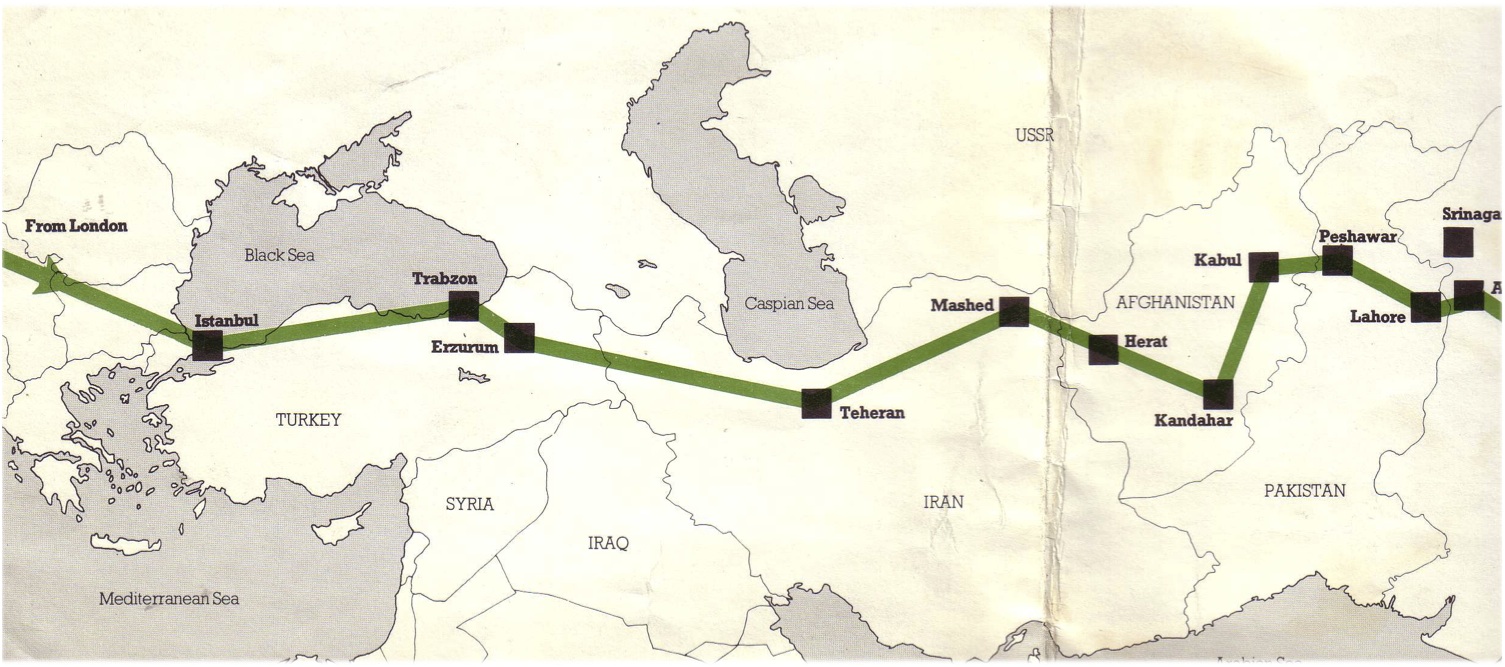
In 1979 I visited Turkey for the first time. I like Turkey – it’s a great and beautiful country with lots of history. It also shows how Islam and extremism don’t go hand-in-hand and how an Islamic country can also be a liberal democracy. Like all free countries, it has its share of extremists who spout forth nonsense that would guarantee a jail sentence or death in the autocracies that govern most of the world. However that is not what this post is about – although Turkey is the seed for the post.
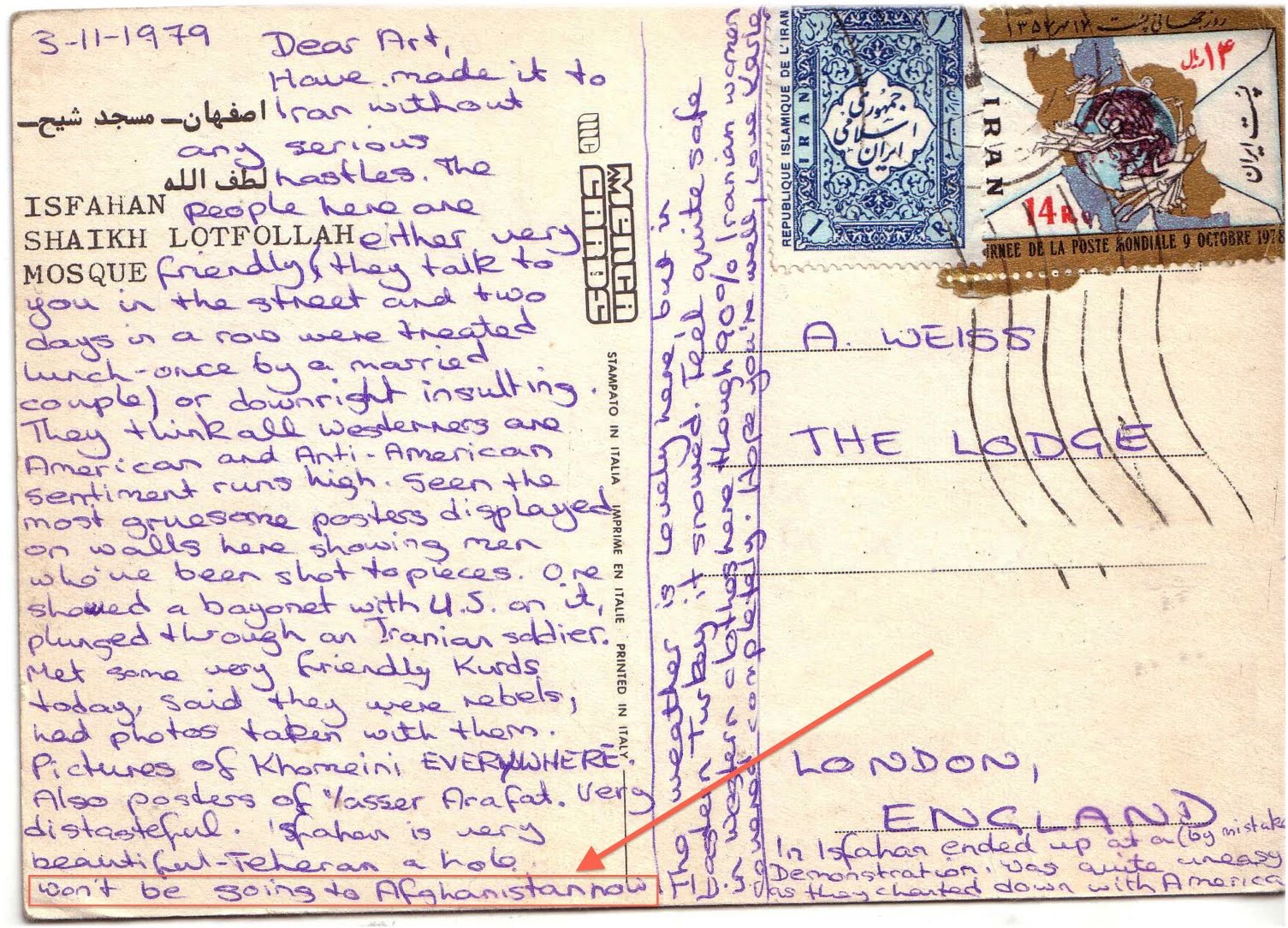
- what their editors view as of interest to their readership
- news when they have sufficient information for a story.
@Jnoubiyeh the second we lost andalus we lost dignity. wars came 2 remind us again. We lost it was when we chose this life over hereafter
Unfortunately publicising such views are unfashionable and often suppressed – so instead we draw incorrect conclusions and victimise the victim (e.g. Israel) and praise the oppressor (e.g. Hamas).
Lies, Damned Lies, Statistics & Facebook
I’ve been impressed with the numbers of people using social networking sites – and the importance of social networking for marketing has become significant over the last few years.
Facebook claims 400 million users (i.e. nearly 6% of the global population that is approaching 7 billion people). I’ve always thought that this figure must include duplicate accounts – as I don’t believe that most people in China, India, Africa and many other areas of the world have Facebook accounts (or even computers – although the numbers are growing). The World Bank stated that there were just under 300m Internet users in China and 52m in India in 2008. (There’s a great graph of this at Google’s Public Data tool – that shows that in 2008 there were around 1.5bn web-users).
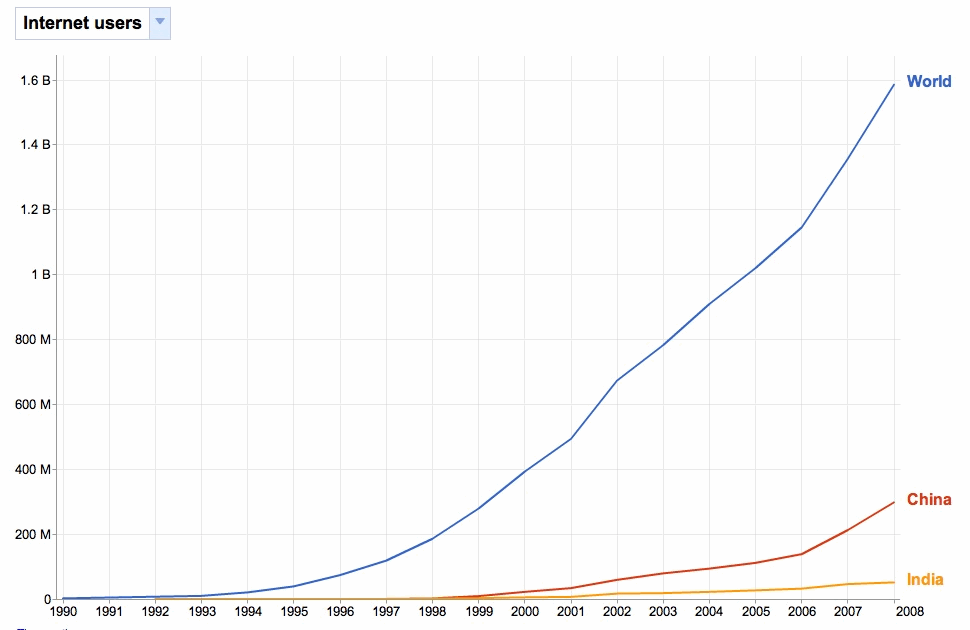
Even taking account the exponential growth – let’s assume that web users globally are now over 2 billion people – Facebook’s figures imply that 1 in 5 users have a Facebook account.
I know of many people who don’t have an account and some who refuse to get one. In my age group (over 40), I’d guess that the majority don’t. So where this 400m figure came from and what it includes is a key question.
It now seems that Facebook has been boosting it’s membership figures. I just read this article from one of my favorite sites (www.pandia.com). Apparently Facebook has been telling advertisers that it has 1.6m users in Oslo. The trouble is that the greater Oslo metropolitan area only has 900,000 people. Facebook apparently counts members by IP address – and I guess that it is feasible that this could include users who access the site via Oslo based web-servers. However not if you consider the next statistic given. The Facebook advertiser tool says that there are 850,000 Facebook users between the ages of 20-29 in Norway – which is 235,000 more than the total numbers (613,000) in that age group.
This over-inflation isn’t just a Norwegian issue. According to CheckFacebook.com (a site that tracks data from the Facebook advertising tool giving Facebook membership numbers), almost 63% of online users in the UK now have a Facebook account. That’s 27m out of a total UK population of 62m. In some countries it’s even higher. Apparently all (100%) Nicaraguan, Qatari and Bangladeshi web users also have a Facebook account, as do 99% of Indonesians, 98% of Filipinos, 97% of Venezuelans, and 85% of Turks.
It’s possible that these statistics are true. However, if so, I’m sure that they also include occasional and infrequent users as well as dormant and duplicated accounts.
One of the most important types of competitive intelligence analysis is to not take everything at face value. When presented with figures, it’s important to sense check them – wherever possible by using other sources (e.g. official population statistics). Only then should such data be used in decision making. You should also ask whether there is an incentive to exaggerate or under-estimate statistics. If there is such an incentive, it is likely that this will be done, at least in the published data. Decisions made using such erroneous or manipulated figures will probably be poor decisions and fail to achieve the expected results. In the case of Facebook, the incentive in exaggerating membership figures is that they can then boost their attractiveness to advertisers, and consequently their advertising revenues.
Quotations & Competitive Intelligence
I’ve been reading Seena Sharp‘s new book “Competitive Intelligence Advantage”
The book is good (at least so far) – and an easy read which is more than can be said for a lot of business books. More importantly Seena’s approach corresponds with mine. She emphasises that competitive intelligence is not just about competitors but about understanding the total business environment and how it is changing, and using this knowhow to make effective business decisions. This means it’s not just a how-to-do-it book like many of its competitors but a why-to-do-it book too. This is important. Many businesses still fail to understand why they need competitive intelligence. If you don’t understand the need, why do it. Others see the focus as primarily on competitors – but they already “know” all about them so are “OK” (or so they believe). The book exposes this canard – and shows why surprise is so dangerous for companies.
Although so far, I have mostly praise for the book, there is one niggle. Making decisions on inaccurate intelligence is dangerous. It is always important to check facts first rather than to assume that just because something is common knowledge or sounds right it is correct. In the world generally, there have been many mistakes made based on information that turned out to be rumour or false. Part of the role of analysis is to verify information – and act accordingly. Failure to verify information is a route to strategy failure.
So what is my niggle. It relates to a quotation on page 20: “It is not the strongest of the species that survive, nor the most intelligent, but the one most responsive to change.” This is a great quotation – and it is widely used. A search on the Internet turns up multiple examples – and most claim it was written by Charles Darwin, in his works looking at evolution. The problem is that Darwin almost certainly never said or wrote this. A few years ago, I wanted to use this quotation in an article I was writing – and needed to provide a reference. I searched through Darwin’s complete works online and couldn’t find it. I then contacted Nigel Rees, an expert on quotations who couldn’t either. Replies to a post I made to the FreePint Bar suggested that the attribution was probably false (but nobody knew where it originally came from). The series of posts at FreePint both by me, and others, debunk a few more commonly attributed quotations too. (E.g. “Lies, Damned Lies and Statistics” was definitely not originally said by Mark Twain as many claim and possibly not by Disraeli either, as I and others had thought.
Whenever I use a quotation I try and attribute it – and give a reference for the source, where possible. Maybe it’s because I’m pedantic or overly thorough. However I also believe it is part of the mindset needed for effective competitive intelligence. Just because something is commonly believed doesn’t make it true and I wish Seena had either stated that the quotation was “attributed” to Darwin instead of being by Darwin – or found the source.
In fact, the source was probably a close follower of Darwin – such as JBS Haldane. And Haldane supplies a lesson for all involved in competitive intelligence: just because something is unexpected doesn’t mean it won’t happen.
A discussion between Haldane and a friend began to take a predictable turn. The friend said with a sigh, ‘It’s no use going on. I know what you will say next, and I know what you will do next.’ The distinguished scientist promptly sat down on the floor, turned two back somersaults, and returned to his seat. ‘There,’ he said with a smile. ‘That’s to prove that you’re not always right. Found at Today In Science History‘s page on Haldane – quoting from: Clifton Fadiman (ed.), André Bernard (ed.), Bartlett’s Book of Anecdotes (2000), 253.

Go to AWARE's web-site



 Competitive Intelligence News
- Data for growth - Part 4: CRM data enrichment: Sales and marketing intelligence with AI - Moody's
- Five Findings About Today’s Market And Competitive Intelligence Programs - Forrester
- My ‘detective’ job as a competitive-intelligence consultant for pharma - Nature
- Market Logic Software Included in Latest Market and Competitive Intelligence Platforms Landscape Report - newswire.com
- Lifesight Launches “Mia,” an Agentic AI Marketing Intelligence Agent - Yahoo Finance
- Sales Teams Lose Competitive Deals Without Disciplined Competitive Intelligence, According to Info-Tech Research Group - PR Newswire
- Enhancing Bank Performance with AI-Powered Competitive Intelligence on AWS - Amazon Web Services
- Marketing Intelligence Adds Value to Growth Partnerships: Nielsen’s Peter Naylor - Beet.TV
- Strategic Insights: The Value of Competitive Intelligence - Law.com
- Yolando, a Competitive Intelligence and Generative Engine Optimization (GEO) Platform, Today Announced Its Official Commercial Launch With $8.5M USD in Total Cumulative Funding From Drive Capital - Business Wire

 Find It Out - Research Secrets and More