A celebration of diversity
 People crave unity – and dream of a world without conflict. Business emphasises the idea that all staff should be singing from the same songsheet. Motivational posters emphasise such teamwork through relevant pictures – typically showing sporting images such as rowers – all pulling together in unison.
Having rowed, while at school, I can appreciate this image – a boat where the rowers fail to row as one will quickly flounder. However I question whether such unity is good for business or the world.
The bible story of the tower of Babel gives a different perspective on this that is worth considering (and thanks to Rabbi Andrew Shaw for the idea). The story is related in Chapter 11 of Genesis.
Verse 1: Now the whole earth had one language and one speech.
On first reading this fails to make sense. If they were one language, then surely they were “one speech”. However this is not what the text is saying – it is suggesting that not only did they all speak the same language, but they all thought the same and said the same. There was no disagreement. A few verses later, this sense of common purpose is manifested as an action plan:
Verse 4: And they said, Come, let us build ourselves a city, and a tower whose top is in the heavens; let us make a name for ourselves, lest we be scattered abroad over the face of the whole earth.
The people are behaving as one – they all agree and show a desire to congregate together, rather than spreading across the earth and showing independence of thought and action.
This view seems utopian. No racism; no hatred; no conflict; total harmony and love of fellow man, to the extent that they don’t want to separate.
Yet what happens next, in this context, is incredible.
Verses 6-8: And the LORD said, Behold, the people are one and they have all one language, and this they begin to do; and now nothing will be withheld from them which they have imagined to do. Come, let Us go down, and there confound their language, that they may not understand one another’s speech. So the LORD scattered them abroad from thence upon the face of all the earth; and they left off building the city.
Rather than supporting human endeavour, God seems to be punishing it – and actually destroying this unity, so that mankind is forced to spread out across the world. The question is why? What is so wrong with thinking the same, acting the same and believing the same? The text even suggests that mankind would have been able to do whatever it wanted to do, had God not acted.
I believe that in fact there is a lesson for business here. Imagine two businesses: the first expects conformity, has top-down management that gives instructions and punishes a failure to obey. Such a business will quickly oust anybody who fails to follow company mores – leading to a strong culture, and way of working. In contrast, the second business encourages diversity and embraces change. There may also be a strong culture for this second business but it will be based on flexibility and recognition that each staff member is an individual and it will respect their differing opinions.
The first business would succeed when their isn’t much competition and where the business environment is stable and unchanging. In fact such a business could become a powerhouse in such circumstances, as its single purpose and single mind would allow it to do whatever it wanted.
Unfortunately in the 21st century, this doesn’t happen. All business faces competition and change is a fact of life. A business that was unwilling to respect differing opinions would fall into an almost idolatrous believe in routine, and be unable to change course easily. It would be impossible to suggest that an agreed business plan had weaknesses – as challenging the established order would be anathema. In contrast, the second business type would flourish as it would take ideas from wherever or whoever they came from, and use them as relevant. Flexibility would be key, and such a business would be able to move out to new markets and geographies.
That is the lesson of the story of the Tower of Babel: diversity is key as expecting the world to remain constant is not the real world. Change is inevitable and fearing change is poor management. Instead businesses that respect different ideas and opinions are the ones that can adapt and grow – rather than those for which routine becomes their business idol.
Getting found on the web
I’d planned to write this post on business culture, working as part of a team and leadership. Meanwhile I’m still tinkering with WordPress – trying to get to know it better. There’s a couple of things I liked about Google’s Blogger tool that I’ve not yet managed to work out how to do on WordPress. Actually that’s not completely true. If you download WordPress and blog on your own server it’s fairly easy. However there are also things against doing that – for example some technical details, security & spam, etc. Conversely WordPress.com won’t let me download some of the plugins I wanted. Despite this, I’m pretty happy with WordPress as a blog platform.
While searching around, I came across a great presentation from Matt Cutts of Google, given at WordPress’s 2009 San Francisco conference.
Matt Cutts is well known as not only a Google expert (naturally) but also as an expert on search engine optimisation – in other words, how to get found on the web. There is so much in this one presentation that I think it should be compulsory viewing for everybody who writes for the web. Although I try and do most of what was said – there’s still more for me to do, and he had some great examples. The focus was on blogging using WordPress but in fact much of the content was much wider – with explanations on what search engines (and specifically Google) look for when indexing the web.
As not everybody will spare 45 minutes to watch the video, I’ll summarise some of the content – and the slides can be found at Matt’s web-site.
Matt starts by asking why write a blog in the first place, but quickly moves onto optimising sites for the web and how to increase your chances of being found. He gives a simple explanation for Google’s PageRank (named after Google founder, Larry Page, rather than that it measures the web page importance / popularity based on the number of links to the page). Around half way through the presentation, he starts emphasising the most important thing about writing for the web (whether for a general site or for a blog). The writing has to be relevant and reputable. Good and interesting writing gets read. Boring, trite, repetitive writing doesn’t. In other words, if you don’t love what you are writing about, and don’t know or have anything to say, then don’t say anything. (For more on good writing, read the Write Way – my brother’s blog – covering how to produce technical documentation that’s understandable).
Then we get to the bits on SEO (Search Engine Optimisation – i.e. writing web-sites so that they can be found). When I take training courses on finding competitive intelligence on the web I always emphasise the need to understand how sites get to the top spots. If you understand this, then it becomes easier to think of ways of finding sites that aren’t found on the first page – and often these are the pages that hold the hidden gems that the competitor analyst has to find.
One key skill is to think of alternative terms. As a portable back-up device I tend to use a memory stick. However other terms for the same device are “flash drive“, “USB drive” and a few others. Searching for only one of these risks missing out sites not using that term but one of its synonyms. Cutts gives an example of searches for ipod car for connecting an ipod to a car’s radio / entertainment system. There is an alternative less costly technology called iTrip that also allows an iPod to be connected to the car radio. For every two searches using the term iPod Car, there was one that used the key word iTrip. This means that excluding the latter term from sites selling the former will result in them missing out on a third of the potential Internet traffic. From a competitive intelligence perspective, it would also mean missing out information on a competing technology. Just because it’s not exactly the same, using a different technological approach and costing less, doesn’t mean it’s not also a competitor – so searching for one and not the other would mean missing out on what customers are actually looking to purchase.
Other SEO techniques covered include web-page naming, establishing a reputation, monitoring visitors via analysis of log files / google analytics and how not to spam (and scam).
The camera never lies… or does it?
When people look at a photograph, they see a snapshot of history. That is one reason that people used to say that the camera never lied. Of course, today, with Photoshop people are warier and look for signs that the photo has been edited. There have been a number of notorious recent incidents of photo editing that highlight this problem. Examples include
- a photo used by Microsoft for advertisements in the US and Poland. The US photo includes a black man but the almost identical photo used in Poland has superimposed a white face over the black one (although the hands were not changed in colour);
- the Spanish Royal Family: a recent photo of Spain’s crown prince Felipe shows him in identical poses, with the same facial expression. The only difference is the uniforms being worn – one as an army officer, a second as an officer in the air force and the third as a naval officer. In this case, the Spanish royals have denied that the photos were edited although they have admitted to previous editing of photos to portray the desired image;
- Stalin – who photo-retouched numerous photographs to remove opponents. Trotsky, Nikolai Yezhov (the NKVD leader), Kamenev and others were removed from official Soviet photographs;
- Reuters propaganda photos used to attack Israel by, for example, removing a blood-soaked knife from the hand of a participant of the Mavi Marmara Gaza aid flotilla which had (probably) been used to attack an Israeli soldier lying in injured on the deck of the ship, or several examples where Reuters manipulated photos taken during the 2006 Israel Lebanon war – by duplicating bomb damage, smoke trails and similar.
However there is another problem with photos – and also news stories, and gathered information in general. That is the context. Understanding the context is crucial for effective business decisions. Gathering information is not the difficult bit. It’s analysing the information to convert it into intelligence that is hard. Without the correct context, poor or even disastrous decisions may be made. These may impact both business and individuals.
An example of how this can happen was highlighted in a sermon given by Rabbi Ivan Lerner on the sabbath between the Jewish New Year (Rosh Hashana) and the Day of Atonement (Yom Kippur). Rabbi Lerner pointed out that the Hebrew word for truth (אמת Emet) is made up of the first, middle and last letters of the Hebrew alphabet. Truth about an event isn’t just information about what is happening at a point in time, but also includes the events that led up to that point, and the consequences of the actions taken based on the event. It includes the beginning, middle and end. Rabbi Lerner gave an example from the famous photograph taken by Eddie Adams on the 1st February 1968.
 This photo led to Adam’s gaining the 1969 Pulitzer prize for spot news photography, as well as the World Press Photo award. The photo showed the moment of execution of a Viet Cong prisoner by General Nguyen Ngoc Loan. Close examination even showed the bullet exiting from the prisoner’s head.
The impact of the photo was immeasurable. Calls were made to charge General Loan with a war crime for the execution of an “innocent” civilian. The anti-war movement used the photo to justify their protests against a war that was seen as overly savage, cruel and gratuitous.
The impact on General Loan was significant. A few months later, Loan was severely wounded and taken to Australia for treatment. When people realised he was the same man from the photo, protests led to him being evacuated to the Walter Reed Army Medical Center in Washington. Even then protests continued – and Loan returned to Saigon, leaving the army due to his injuries. At the fall of Saigon his pleas for help from the Americans were ignored although in the end, he and his family managed to escape and he moved to the US – where he took on a new identity. He opened a pizzeria in Virginia but in 1991, he was discovered – and business disappeared, with graffiti scrawled on the restaurant walls.
The story so far shows the event and its aftermath – but not the context that led to the execution. General Loan was vilified as a war criminal, while Nguyễn Văn Lém was seen as the innocent victim. Loan had to hide his identity and lost his future as a result. In fact, the executed prisoner – Nguyễn Văn Lém – was not an innocent. He commanded a Viet Cong death squad that had targeted South Vietnamese police and their families. He was captured near a ditch containing over 30 bound and shot bodies of police and their relatives – men, women and children. Lém was personally responsible for the deaths of several. Adams has confirmed that this was the case. The Viet Cong had attacked during a truce arranged for the Tet Holiday. Some of their victims has been at home celebrating.
Subsequently Adams found out more about General Loan. Loan was seen as a hero to the South Vietnamese. He wasn’t just a soldier. He fought for the construction of hospitals, helping war orphans and for a way of life that was destroyed. Adams regretted taking the photo because of what happened afterwards. (Eddie Adams describing his notorious Vietnam photograph)
…Two people died in that photograph: the recipient of the bullet and GENERAL NGUYEN NGOC LOAN. The general killed the Viet Cong; I killed the general with my camera. Still photographs are the most powerful weapon in the world. People believe them, but photographs do lie, even without manipulation. They are only half-truths. What the photograph didn’t say was, ‘What would you do if you were the general at that time and place on that hot day, and you caught the so-called bad guy after he blew away one, two or three American soldiers?…’ (Eulogy: GENERAL NGUYEN NGOC LOAN, Time Magazine, Jul. 27, 1998)
Information needs a context. When gathering information it is important to know the source and why the information became available. It is important to understand the context and when interpreting it, there should be no hidden agenda. The Adams picture failed in that it didn’t give the context and instead only helped to support and confirm the biases of anti-war journalists, letting them further their own agenda. As such, it ruined Loan’s life.
Reading the news
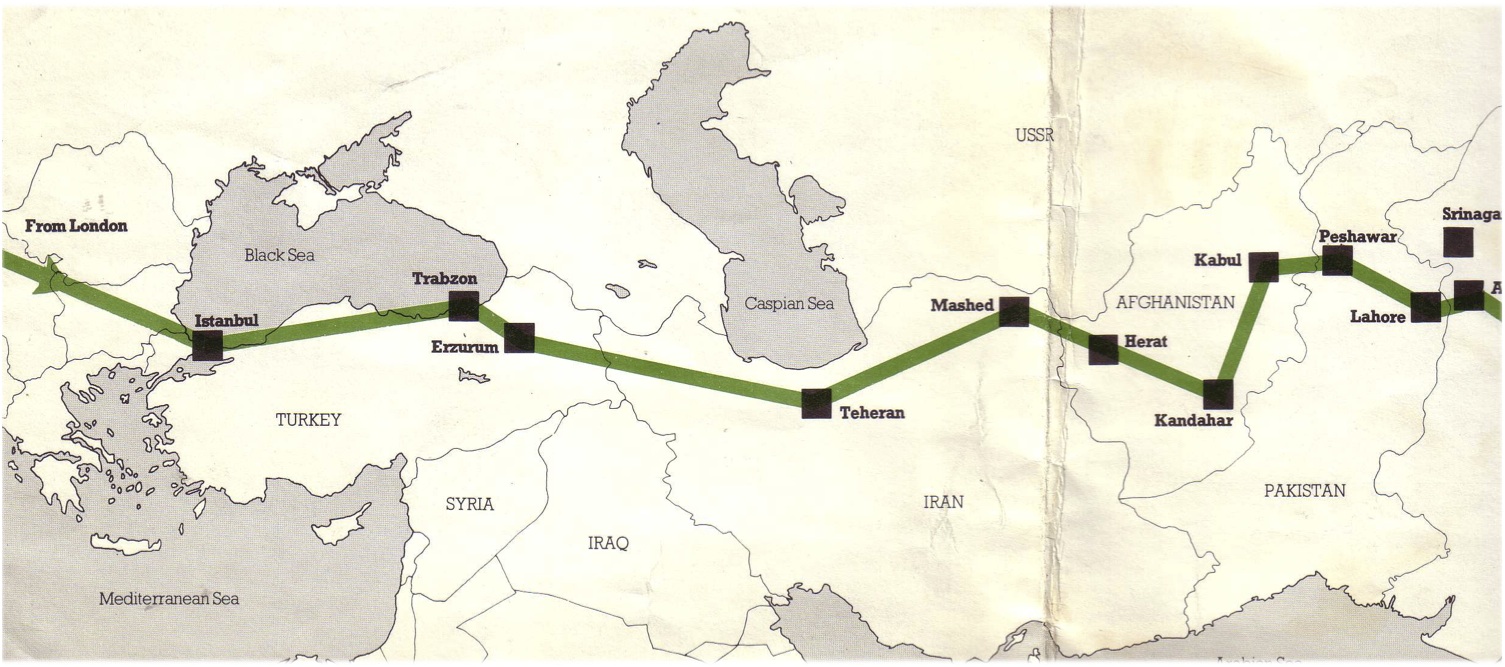
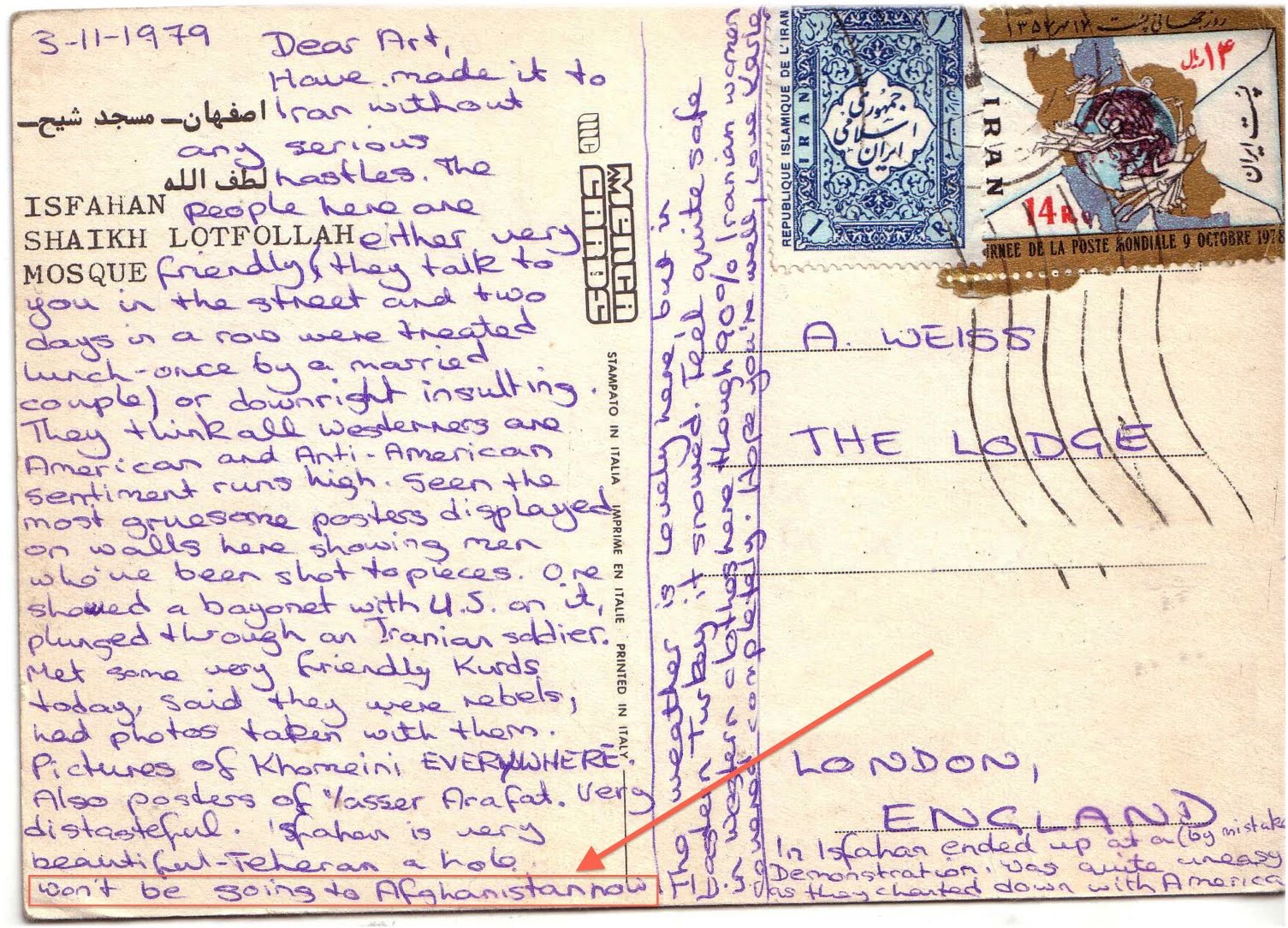
In 1979 I visited Turkey for the first time. I like Turkey – it’s a great and beautiful country with lots of history. It also shows how Islam and extremism don’t go hand-in-hand and how an Islamic country can also be a liberal democracy. Like all free countries, it has its share of extremists who spout forth nonsense that would guarantee a jail sentence or death in the autocracies that govern most of the world. However that is not what this post is about – although Turkey is the seed for the post.
- what their editors view as of interest to their readership
- news when they have sufficient information for a story.
@Jnoubiyeh the second we lost andalus we lost dignity. wars came 2 remind us again. We lost it was when we chose this life over hereafter
Unfortunately publicising such views are unfashionable and often suppressed – so instead we draw incorrect conclusions and victimise the victim (e.g. Israel) and praise the oppressor (e.g. Hamas).

Go to AWARE's web-site



 Competitive Intelligence News
- Lifesight Launches Mia Marketing Intelligence Agent - Let's Data Science
- Lifesight Launches “Mia,” an Agentic AI Marketing Intelligence Agent - Yahoo Finance
- Data for growth - Part 4: CRM data enrichment: Sales and marketing intelligence with AI - Moody's
- Tonic Worldwide launches ‘Groth’ an AI-Powered Marketing Intelligence Platform built to deliver Answers, Not Just Data - MSN
- Five Findings About Today’s Market And Competitive Intelligence Programs - Forrester
- Maverick Marketing Intelligence Competition - Spring 2026 - The Shorthorn
- My ‘detective’ job as a competitive-intelligence consultant for pharma - Nature
- Sales Teams Lose Competitive Deals Without Disciplined Competitive Intelligence, According to Info-Tech Research Group - PR Newswire
- AI Ad Generator for Facebook With Real-Time Competitive Intelligence Launched - The Norfolk Daily News
- Marketing Intelligence Adds Value to Growth Partnerships: Nielsen’s Peter Naylor - Beet.TV

 Find It Out - Research Secrets and More