Archive
Unethical CI – out in the open!
Part of the task of a Competitive Intelligence consultancy is to show companies that competitive intelligence is a necessary business skill – and that it is legitimate and ethical to outsource competitor research to external consultants whatever can’t be handled in-house. (Reasons for outsourcing include lack of time, lack of skills and experience and the need for an objective view – which can’t be obtained by doing research in-house). In fact AWARE views training in competitive & marketing intelligence as a key element of its business mission, so as to raise CI/MI skills.
There are many ethical competitive intelligence consultants apart from us – in the USA there is Market Analytics, Fuld and Aurorawdc to name three. In Australia – the Mindshifts Group, led by CI industry leader Babette Bensoussan is important. Within Europe there are similar consultancies. We link to a number of top CI consultancies on our alliances web pages.
Unfortunately there are also several companies that fall short ethically and even legally. I recently came across one – with a great domain name, but that’s as far as it goes. This “business intelligence” company (which I won’t name for now, for legal reasons), openly states that they engage in industrial espionage.

Secondary research – their “light touch” is legitimate if it doesn’t employ hacking or password cracking. However their in-depth research placing moles into the target company is highly unethical and probably illegal (depending on the information supplied, and any non-disclosure agreements signed by the agent and their “employer”).
Such behaviour brings all competitive intelligence under suspicion – which is part of the rationale behind this post: to expose such shenanigans.
Fortunately this “business intelligence service” doesn’t come cheap and only very few (probably desperate) companies will avail themselves of such services. In fact the company actually implies this by saying on their web-site:
“We hope that you never need our services, but if you do, then you can be assurred of an excellent service.“
Their charges range from £10,000 for the “light touch” research to £150,000 for their in-depth research (including “employee placement and surveillance“). Even this is not their top price. When looking at individuals, pricing ranges from £25,000 for “light touch” research verifying personal details, employment, connected people, etc. to £200,000 for fully in-depth analysis (lifetime checks, asset checks, lifestyle, etc.). Some assignments are charged at fees of up to £25,000 per day (although most are claimed to be a fraction of this).
To put things into context, we have never charged anything like £10,000 for pure desk research and from conversations with other consultants, they haven’t either.
They claim that their “researchers” come from military, police and government service backgrounds – but they don’t mention any business or marketing background. They seem to be ignoring, or perhaps do not even know the risks involved in industrial espionage and based on what they offer, I’d question whether they’d see the value in standard strategic analysis as a means for understanding competitors. (The US Economic Espionage Act, 1996 is just one risk. Even when companies don’t go to law, there can be serious financial ramifications for espionage).
Instead of looking at public non-confidential intelligence that, when aggregated, can create a detailed picture of all aspects of a company they seem to prefer subterfuge. Such approaches may say what a company is currently planning but it won’t help in understanding what the company is thinking or likely to do in the future
Interestingly this company is not as immune to standard CI investigation as they probably think. Standard secondary research suggests that they use a Plymouth, UK, based front company for finding work placements for their agents, and that their minimalist web-site has at least one hidden / secret directory – which can be found by searching for a robots.txt file.
CI versus corporate espionage: thoughts on an ABC News story
I read this news item from ABC news ‘James Bond’ Tactics Help Companies Spy on Each Other” and had only one thought: that guy is totally unethical and wrong.
A few years ago, an Israeli colleague commented to me that in his experience, most of the ex-secret service operatives who try and enter the commercial world of CI fail. The reason he said is that they don’t know the boundaries of what is legitimate competitive intelligence collection and what is corporate espionage, and illegitimate. He also said that in many cases, they also have no real idea of budgets and what is valuable to a company strategically versus the cost of obtaining it. Most never had a budgetary role when working for the various national security services and so could not do a cost-benefit analysis effectively.
This story shows both examples. Purchasing the garbage from an organisation is not only unethical but strikes me as wasteful. Garbage is thrown away for a reason – it’s not wanted and valueless. The majority of companies today have shredders and routinely shred anything that would be seen as highly sensitive. True, the mid-level material may be chucked, but not the high-level stuff. (And those that don’t shred deserve what they get – I’d be surprised that any Fortune 500 companies don’t have shredding contracts!)
As for the other shenanigans implied – any company that employed a consultant to use such techniques deserves to get sued and end up paying more than they gained. The trouble is some do – and the list of companies that learned the hard-way that espionage doesn’t pay is still growing.
So let me make it clear: espionage is wrong, while CI is a legitimate practice that uses only ethical means to collect intelligence.
This involves declaring your identity and NOT collecting information that would be classed as secret or confidential. As Issur Harel the Israeli spy-chief responsible for capturing the Nazi war murderer, Eichmann, is reported to have said:
We do not deal with certainties. The world of intelligence is the world of probabilities. Getting the information is not usually the most difficult task. What is difficult is putting upon it the right interpretation. Analysis is everything. James Bond is not the real world.
Attacking a castle – or a competitor!
The leading management guru, Rosabeth Moss Kanter’s, latest blog post discusses ways to attack a castle: Four Ways to Attack the Castle — And Get a Job, Get Ahead, Make Change.
Although the article is talking about job-seekers and change agents, the same applies to competitive intelligence and strategy, and I’ve sometimes used the same analogy in my training courses.
So how does attacking a strong fortress compare to competitive intelligence collection. Well – the approach that some still seem to think the best approach – is the full frontal attack. Go for the key contact and hope that they will speak to you. The problem is that these people tend to be surrounded by gatekeepers, guards and you may not even get their name, never mind getting to speak to them. This is the corporate equivalent of having hot oil poured down upon you.
Moss Kanter describes four other approaches that can also be used for CI collection.
1) Find other doors.
Rather than target the main entrance with your battering ram, look for a door that’s not guarded. If you want to interview somebody, don’t call switchboard and ask for the purchasing manager – as switchboard will ask what it’s about and you will find yourself in an interminable voice-mail loop ending with a “send an email to suppliers@companyname.com”. Instead, use networking tools – such as LinkedIn – to find the name of anybody involved in purchasing within the target company and ask to speak to them directly. Knowing the name means you get put through and bypass the switchboard gatekeeper.2) Befriend the fringes.
Be polite. Switchboards get fed up with rude callers – so be friendly. Chat – and treat the operator with respect. They may know more than you think and you may get a name that way.You won’t get put through to the CEO or CFO or any C-level executive directly. Instead, you’ll end up speaking to their personal assistant – the guard and gatekeeper for your source. Like the guards and gatekeepers of old, these people know who passes by, and what goes on. So rather than insist on the C-contact, be nice to the PA and chat to them instead. You may well find that all you need to know comes from them instead.
3) Go underneath
Often, going to the top won’t help. If the information you require is sensitive, the people at the top know the sensitivity – including their PAs. They won’t talk and you will get nothing. Rather, consider the people who report to them, or who have managers who report to them. Such people may not know the whole picture – but speak to several and you soon will. Each interviewee will feel flattered that you view their knowledge as important – and won’t realise that the small bits of information they know, when combined with other small bits, can reveal the secrets the higher-ups would like to keep hidden.4) Go around the castle
Rather than trying to contact the organisation directly, look for people who are now outside but know what goes on inside. These include ex-employees, obviously. However others may also know information – and be willing to share if asked in the right way. These can include your customers, your competitor’s customers, their suppliers, as well as industry consultants, trade association staff and many more similar sources.
Collecting competitive intelligence doesn’t always depend on looking for the obvious source. Like attacking castles, often the secret is to find the weaknesses that allow you to gain entrance, gather what you need to know and leave without anybody even noticing your visit.
Forte 1 – truth or lie? A brief competitive intelligence case study.
I received a phone call today from a charming lady who claimed to work for a company called Forte 1. I knew nothing about her company which seemed to want me to switch my business telephone line, and also said that they offered computers at great prices, and more.
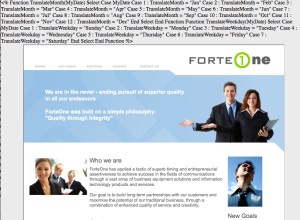
Our goal is to build long-term partnerships with our customers and maximise the potential of our traditional business, through a combination of enhanced quality of service and creativity. |
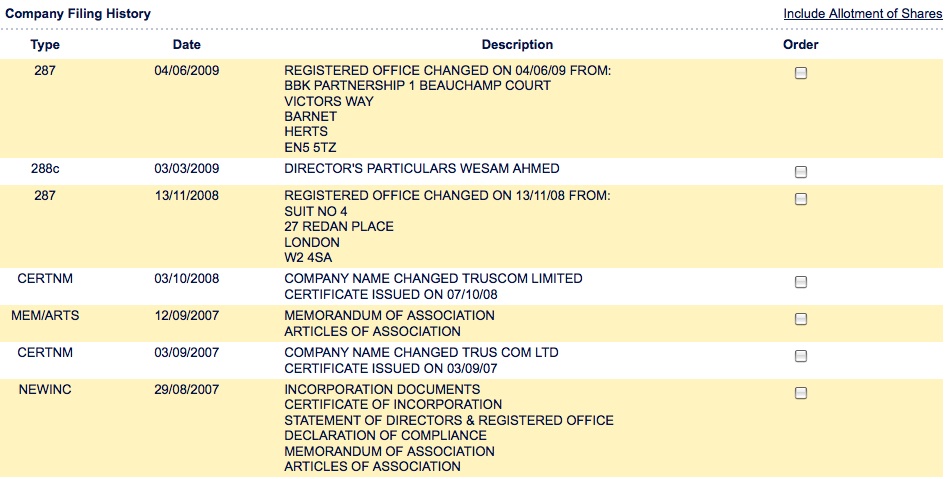 In fact, there appear to be several changes to the record since this company was founded – in August 2007. It first appeared as Trus Com Ltd, then changed to Truscom Ltd before metamorphosing into Forte1 Ltd in October 2008. The company has also changed address twice – from a W2 4SA address in London to an address in Barnet on the outskirts of London.
There are 5 domains hosted on this IP address.
Here are a few of them:

Go to AWARE's web-site



 Competitive Intelligence News
- Pomo: $4.5 Million Raised For AI Marketing Intelligence Platform - Pulse 2.0
- AI Marketing Intelligence Tools - trendhunter.com
- TapClicks AI Platform Brings New AI Marketing Intelligence Capabilities to Automate Performance Reporting - AiThority
- Pomo Raises $4.5M for AI Marketing Intelligence Platform - National Today
- Five Findings About Today’s Market And Competitive Intelligence Programs - Forrester
- Sales Teams Lose Competitive Deals Without Disciplined Competitive Intelligence, According to Info-Tech Research Group - PR Newswire
- My ‘detective’ job as a competitive-intelligence consultant for pharma - Nature
- Data for growth - Part 4: CRM data enrichment: Sales and marketing intelligence with AI - Moody's
- How a Competitive Intelligence Dashboard Enabled Real-Time Market Monitoring for a Global Enterprise | Astute Analytica - Yahoo Finance
- Market Logic Software Included in Latest Market and Competitive Intelligence Platforms Landscape Report - newswire.com

 Find It Out - Research Secrets and More